
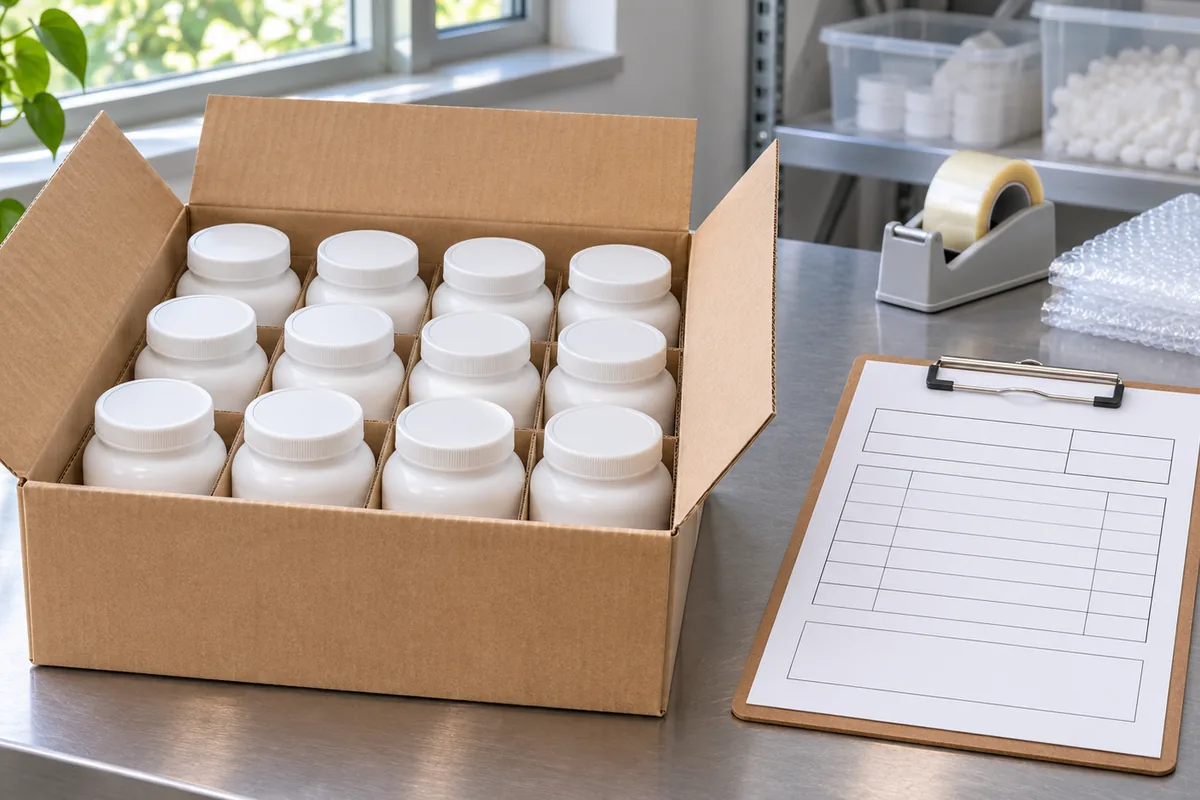
First Pet Supplement Order: Validating a Supplier at 100 Units
A 100-unit first order is not a cheap way to buy product. It is the cheapest way to walk a supplier through the entire chain once: sample, documents, artwork, batch, dispatch. Anything broken in that chain shows up in this order, while the cost of finding out is still small.
Most buyers treat the first order as a price negotiation. Suppliers treat it as a test of whether the buyer will be worth the setup. Both are right, and the party that learns more is usually the supplier, because a small order reveals how a buyer behaves when something goes wrong. A small first order proves that the process works end to end and that the plant can execute a written specification. It cannot prove the unit cost at scale, and it cannot prove long-term stability, because neither of those lives inside one batch.
What 100 units can prove — and what it cannot
What it proves is more valuable than it sounds. The order confirms that a formula can be written, sampled, approved and produced by this plant, with this artwork, on this schedule. You learn whether the answer to a question arrives in a day or a week, and whether the certificate of analysis matches what the pack says.
It also proves traceability. One batch, one set of records, one set of retained samples, one number you can point to if a question comes back in six months. If that chain is missing on 100 units, it will not appear on 5,000.
What it cannot prove is the cost curve. Unit cost at 100 units is not the unit cost at scale, and a supplier who quotes the small number as if it were the big one is either inexperienced or hoping you will not ask.
The honest answer separates the two.
Stability is the other thing a first order cannot settle. A chew or a powder needs time in a pack to show how it behaves, and no sample batch compresses that. What you can do is look at the supplier's stability data for a similar formula and check that the reasoning is concrete.
So treat the first order as a process test, not a product test. It tells you whether this plant can be your plant, which is the only question worth answering before you commit to a range.
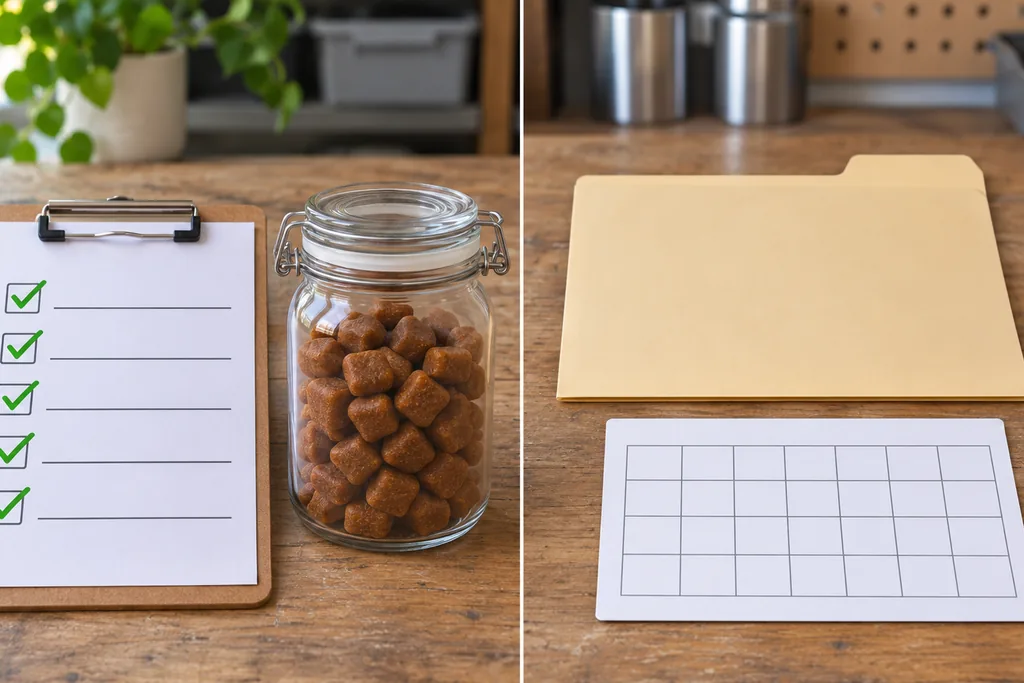
The five things to ask for before you pay a deposit
Before a deposit leaves your account, ask for five things: the facility certificate, a certificate of analysis on a comparable batch, the label template, the sampling schedule, and the terms in writing. Any refusal on any of the five is the answer you need.
Start with the certificate. You are looking for the document that names the site, the scope and the expiry date, and you want to be able to check the number with the issuing body rather than trust a scan. A plant that has done this before sends it without a prompt. Next, a certificate of analysis on a batch that already exists. This shows whether the plant documents what it makes and whether the numbers are stated plainly enough to compare against a specification. A plant without one is not ready for a private label conversation.
Third, the label template. Ask what fields the plant expects you to supply and which ones it fills in. This is where most first orders slow down, because artwork arrives without the storage conditions or the net weight and goes back for a correction that costs a week.
Fourth, the sampling schedule in numbers. A sample takes a defined number of working days and lands on a date, not "as soon as possible". A supplier who will not commit to a date for a sample will not commit to one for a batch.
Fifth, the terms in writing: the minimum, the production window and the payment structure. Verbal terms change the moment the person who said them goes on holiday, and nobody remembers the rest. Ask for the version you can forward to a colleague. Two more questions matter, though they are not documents. What does the plant do when a batch fails release, and who signs off the deviation. The answers tell you whether you are dealing with a system or with a person's memory.
Sample first, then a pilot batch
A sample takes 3–5 working days, and its job is to settle the questions that cannot be settled on paper: taste, texture, appearance and whether the format behaves the way the brief assumed. The pilot batch afterwards exists to prove the plant can repeat the sample. What the sample can show is immediate. Whether a dog takes the chew, whether the powder flows, whether the colour survives drying, whether the label fits the container. It also shows how the supplier handles feedback, which is the part buyers underestimate.
What the sample cannot show is time. Stability, seal performance over months, and how the product reads after a shipping cycle all need a real batch and a real calendar. A supplier who offers stability conclusions from a sample is guessing.
The pilot batch is where the two documents meet. You compare the batch against the approved sample and the certificate against the specification. If the plant can produce a batch that matches a sample within the agreed tolerance, the chain holds.
A first order of 100 units is a legitimate pilot. It is small enough to test the channel and large enough to be a real production run, and it carries custom label and bottle rather than a stock label. The format also decides what a sample can realistically represent: probiotic powder for dogs and cats behaves differently in a sample jar than in the finished pack, because moisture and seal are half the product.
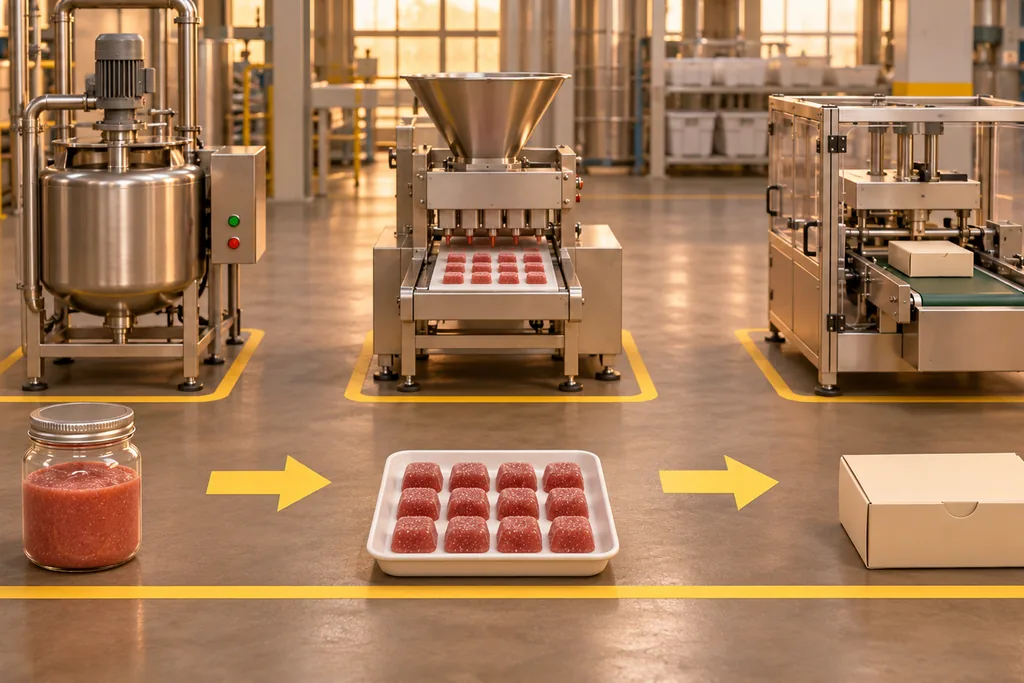
What to test before you reorder
Before you reorder, test six things on the delivered batch: appearance, smell, hardness or flow, label accuracy, batch coding and the retained sample. A failure in any of the six is cheaper to handle now than after a second order.
Start with appearance against the approved sample. Colour and shape shift with raw material lots, and a visible shift is the earliest signal that the next batch may differ more. Keep the approved sample on the shelf, not only in a photograph. Smell comes next, especially for anything with oils or botanical extracts. An off note is the first sign of oxidation, and it appears long before an assay result would show it. If the smell is different, ask for the assay rather than accept an explanation.
Hardness or flow depends on the format. A chew should hold its shape and give a consistent bite; a powder should flow without clumping. Both are quick checks that catch a drying or moisture problem before it reaches a customer.
Label accuracy is the least technical and the most expensive to get wrong. Compare the printed pack against the approved artwork, word for word, including the net weight and the storage line. Retailers reject packs over a missing line. Batch coding matters because it is the key to everything else. If the code on the pack does not match the code on the certificate, the documents describe a different product. Ask for the mapping in writing.
Finally, keep your own retained sample. The plant keeps one, and so should you, stored the same way. In a dispute, the sample you control is the one that settles which batch was which.
The MOQ ladder: 100, then 500
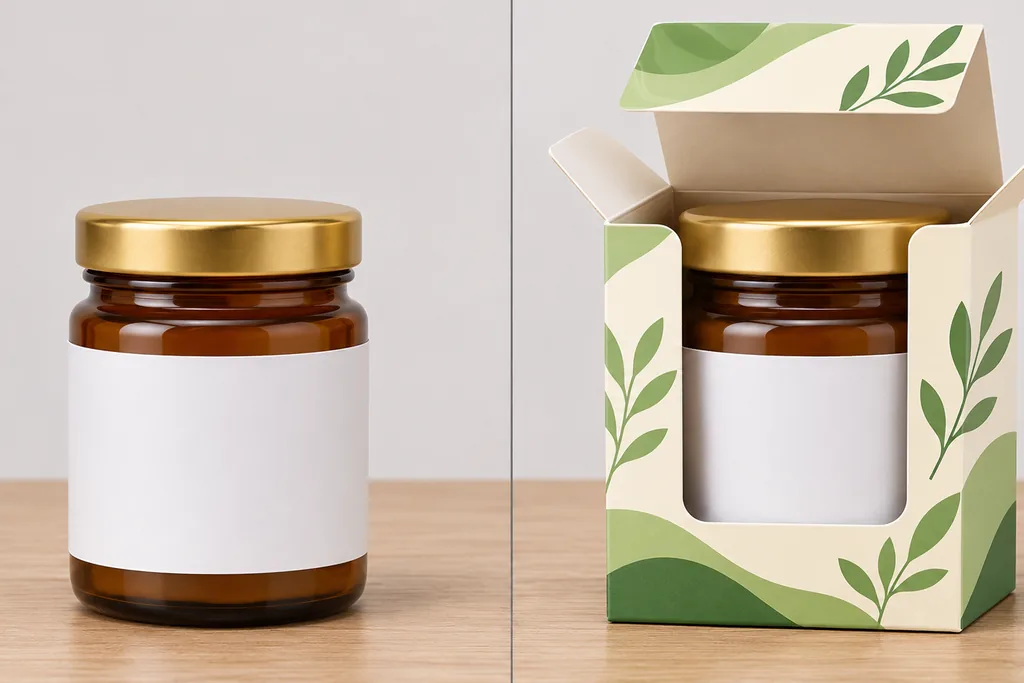
The minimum is 100 units per SKU with a custom label and bottle, and it moves to 500 units when a printed outer carton is involved. That difference is not a policy; it is a print run, a packing step and an inspection point that only exist once there is a carton.
At 100 units you are buying the production chain plus your own label. The plant schedules a small run, prints labels, fills and seals, and releases the batch. Most of the fixed work is the same as on a larger order, which is why the unit cost is higher and why the order is still worth doing.
At 500 units the outer carton enters. A carton is a separate print item with its own minimum, its own proof and its own packing labour, and it changes how the batch is handled at the end of the line. It also changes what the retailer receives.
Between the two tiers, what changes is mostly preparation rather than materials. Carton artwork, a proof cycle, packing verification and often a different shipping configuration. Those are the items that move the threshold, and asking which ones apply to your pack is more useful than arguing about the number.
A first order at 100 units is also how a buyer discovers whether the plant will scale. Ask what happens at a higher volume: which line runs it, whether tooling changes, and how the schedule is reserved.
A plant that answers that concretely is a plant with a plan.
This is where contract manufacturing for pet supplements differs from buying stock: the threshold is a packaging decision, and the packaging decision is yours, not the plant's.
Timeline: what actually moves the calendar
Production takes 20–25 working days, counted from the moment the formula, artwork and deposit are confirmed, and an expedited run takes 10–15 working days when capacity allows. Everything before that date is preparation, and preparation is where the calendar actually moves.
The start point is not the enquiry and not the quote. It is the day three things exist together: an approved formula, approved artwork and a received deposit. A buyer who has two of the three has not started the clock yet.
Samples sit outside the production window. They take 3–5 working days and they are a separate clock, which means a project that needs two sample rounds adds two sample cycles, not two production days.
The usual causes of delay are boring and predictable. Artwork that arrives without the required fields, a formula that changes after sampling, a raw material that has to be ordered, and a decision that waits for a meeting. None of these is the plant's fault, and all of them are visible in advance.
Expediting does not remove preparation. It moves the batch up the schedule when there is free capacity, and it cannot compress a sample that has not been approved or artwork that has not been signed off. Ask what the expedited window depends on before assuming you have it. One practical habit helps: write the four dates into the purchase order. Formula approved, artwork approved, deposit received, production start. When those four are in writing, a delay becomes a conversation about a specific step instead of a general complaint.
Four signals that the supplier is not ready for you
Four answers should end a conversation: no certificate of analysis, no written terms, a promise that compliance is guaranteed, and a sample that does not match the first batch. Each one points at the same underlying problem, which is a plant without a system.
The first is the missing certificate. A plant that cannot produce one for a batch it made is not documenting its production, and without documents you cannot defend a label, a claim or a recall decision.
The second is verbal-only terms. If the minimum, the window and the payment structure exist only in a call, they will change. Written terms are not a sign of distrust; they are the only version two companies can both refer to.
The third is the guarantee. Nobody can promise that a label will be accepted in every market or that a claim will pass review everywhere, because those decisions sit with regulators and retailers. A supplier who promises that outcome is selling confidence, not a process. The fourth is a mismatch between the sample and the batch that followed it. Small differences are normal. A visible difference in colour, texture or smell is a process problem, and it will repeat.
There is a fifth signal worth watching, though it is not in the list of four. A supplier who answers a hard question with a long answer about something else is telling you the honest answer is inconvenient.
That is worth more attention than the brochure.
FAQ
Can I really start with 100 units?
Yes. 100 units with a custom label and bottle is a real production run. A printed outer carton moves the threshold to 500 units, because the carton is a separate print item.
How long until I have product in hand?
Production is 20–25 working days from the date the formula, artwork and deposit are confirmed. Add shipping on top of that. An expedited run takes 10–15 working days when there is free capacity, and samples take 3–5 working days before any of it starts.
Do I need a custom formula for a first order?
No. A first order can run on a formula the plant already produces. A custom formula makes sense when the difference is the reason the product exists, and it adds development and sampling before production.
What does a sample cost and how long does it take?
Sampling takes 3–5 working days, and the cost depends on the raw material, the number of variants and the tests attached to it. What matters more than the number is whether the sample is made to your specification, so you are testing your product rather than a stock item.
Can I change the label after the first batch?
Yes, but it is a reprint and often a re-approval, because the label is part of what was approved. Small wording changes still go through artwork and proof. Plan the change before the next run rather than in the middle of one.
What if the first batch fails QC?
The first step is the retained sample and the batch records, which is why both are requested before the order. A failure should be traceable to a step, and the plant should be able to say which one. Agree in writing, before the order, how a failed batch is re-tested and who decides.
Send the format, the target market and the packaging you have in mind, and we will tell you what a first run at 100 units can realistically prove for that product. We quote after the brief, once the pack and the formula are known, and we say plainly which questions only a larger order can answer.